M— tells me he quit his career in finance to whistle blow against corruption and insider trading. He spent the last two weeks in Canberra, meeting with ministers and testifying before a Senate committee. He will spend the next two in Cobram, teaching Year 8s about Vikings.
In a house owned by the local high school, rented for cheap to blow-in teachers, we eat pizza off napkins and drink red wine from mugs. I ask him the obvious question. Why here, this, teaching? His answer, less obvious, is the revolution. A democratic tidal wave, he says, is about to swamp our class-based education system, summoned by the gravitational pull of artificial intelligence. With infinite resources available instantly, a child’s prospects will no longer depend on their postcode or private school pedigree. Unlimited feedback, on-demand instruction, personalised learning plans. Teachers free to focus on interventions that will actually shift the needle. The result, M— believes, will be a seismic reconfiguration of the Australian education system.
A reconfiguration that, with his unique credentials as both venture capitalist and high school teacher, M— is ready to bankroll.
Depending on who you ask, the purpose of Teach for Australia is: seismic reconfiguration of the Australian education system; seismic ruination of the Australian education system. An offshoot of Teach for America, they fast-track high-achieving Uni grads into disadvantaged public schools, “to ensure all young Australians have access to a transformative schooling experience.” Or, in the view of the Australian Education Union, to “undermine both the quality and retention of the teaching profession.”
Recruiting unqualified and inexperienced TFA associates in the most disadvantaged communities is not just counterintuitive. It is wasteful, inefficient, and damaging for all concerned.
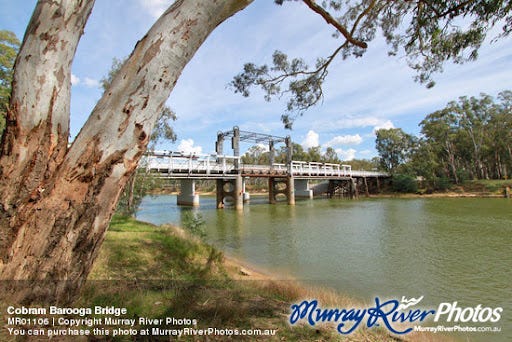
Straddling the Murray River border that separates Victoria from NSW, Cobram and Barooga are essentially one town with two area codes. But during COVID, when lockdown restrictions varied along state lines, the town was cleaved apart. A police checkpoint was erected on the Cobram-Barooga bridge, and essential workers had to obtain permits for their daily commute.
Now, these strange parameters of COVID existence have fizzed away like a fever dream. You can zip across the bridge to get a Zinger box at the Cobram KFC, and zip back for a few rounds at Sporties Mini Golf Barooga, without papers or a permit or pause for thought. It’s business as usual.
And it’s here, this river settlement sundered then restitched, that my business of undermining the quality and retention of the teaching profession has begun. I have spent the last 7 years studying Classics at the University of Melbourne, running retreats at an all-boys private school, and performing stand-up comedy. Now, unqualified and inexperienced, I have been recruited to teach in disadvantaged communities, in a manner wasteful, inefficient, and damaging for all concerned. What’s that Taylor Swift lyric, about anti-heroes? “It’s me, hi, I’m the problem, it’s me.”
My first week at Cobram Secondary feels like a series of comedy skits. One student shouts “Jamarra Ugle-Hagan” as I enter their classroom (apparently we’re dead ringers), another “Victor Wembanyama”. A History teacher tells her Year 9s that the Nazis bombed Darwin during WWII (“Why?” someone asks. “Did they get lost?”) Some English students create a superhero called SuperEshay, whose catchphrase is “I’m from Frankston.” I join a lunchtime activity called Gaga ball, a variant of dodgeball that takes place in an MMA-style walled octagon. M— tells me that he has purchased an eBook about terrorism, to inform the ‘guerilla warfare’ he wants to wage on his old finance foes. A tropical storm rolls through town. I have the single worst coffee of my life.
Joining a group of teachers for a run along the river, I find myself, for all my supposed resemblance to Wemby and Jamarra, straggling at the back. C—, fellow TFA anti-hero, runs with me, and we take to discussing our experiences attending private schools. Mine, I tell C—, had 5 ovals, a swimming pool, and an anti-gravity treadmill, to aid the recovery of our football team. C— learnt French and spent a semester in Nice. As we round the final corner and rejoin the waiting pack, we agree that this fortnight here, for all the whiplash, is welcome. A wake up call, a reckoning, a path back to reality.
My first solo lesson is double Year 7 Humanities, about the building of the Titanic. I focus a lot on posture and voice projection, and squash, heavy-handedly even the slightest hint of subversion. By the end of 2 hours I am more exhausted than I have ever been in my entire life. On our way out to recess, a boy offers me a fist bump. “See ya Mr Jamarra.”
Sharing a cabin at the Cobram RACV resort with publisher-turned-anti-hero L—, we spend our evenings plonked in front of the cricket, trading war stories. Like the posse of Year 7 girls who won’t have a bar of me, much less the faulty rivets employed by the Harland & Wolff shipping company. Or L—’s supervising teacher, who marched into his office and demanded his first lesson plan within 40 minutes.
One evening, as we watch Jasprit Bumrah rip through the Australian top order, I ask L— my go-to question. Why here, this, teaching? He pauses, collects his thoughts, then tells me that he’s fleeing a sinking ship. The publishing industry in Australia is collapsing, mass layoffs and offshoring. But there’s something deeper, he says. An itch he needs to scratch. A hunch, stemming from a short stint as a learning aide in his early 20s, that teaching might make him properly happy. He’s 35 now, and wants to settle, once and for all, the question of whether he can be properly happy.
In my second solo lesson, the Titanic sinks, but I manage to stay afloat. I find that I’m more present this time, more able to smile and relax and talk with ease. The consensus amongst the anti-heroes is that we’re starting to feel less like people impersonating teachers, and more like ourselves, teaching. M— brands himself ‘the iron fist’, because of his ruthless approach to behaviour management. At our farewell dinner, he delights us with a few drunken, decidedly loose demonstrations.
After our fortnight of practicum, L—, C—, the iron fist and I are bound for the real thing. L— and I will spend the next two years in outer-suburban Melbourne, C— in rural Tassie, iron fist in Portland. For all the distance between us, we know we’ll have each other’s backs. We’ve formed a makeshift family, parting with hugs, gratitude and promises to stay in touch.
On the drive home to Melbourne, I switch my CarPlay off and let my mind wander. To robots and rivets and rivers and revolution. To SuperEshay, Gaga ball, guerilla warfare and Jamarra Ugle-Hagan. To my own question. Why here, this, teaching?
Because, I am coming to realise, I have my own itch to scratch. A hunch, that there is more I need to see and know and do. That a sundered life, stranded on one side of the river, is no life at all. That proper happiness requires a risk or two.
‘Travellers have stories to tell’, says an old Irish proverb. Well let my life, let M—’s life and L—‘s life and C—’s life, let all our lives be risky and stressful and storied. May we travel widely, encounter difference, dine at crowded tables. May a cyclone reach us on the prairie, heave us up up and away to a land of colour and confrontation and change. May we follow the yellow brick road all the way to the Riverina and back again, may we live to sing the tale.



Fantastic writing, Dan - Some real characters here. Victoria is lucky to have you "undermining" the teaching profession!